Why I Paint Chickens
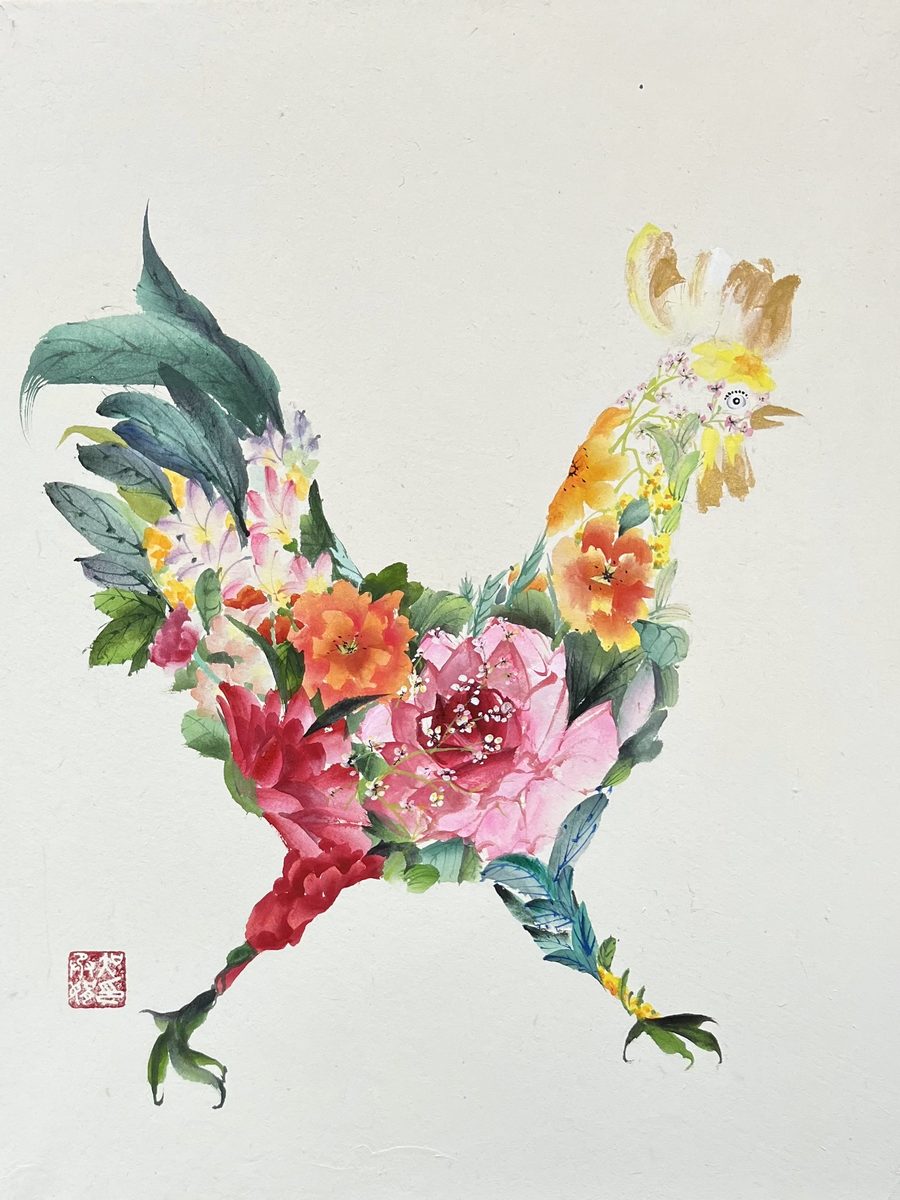
People often ask me: why chickens? When there are tigers, peonies, whole landscapes to paint.
In Korean folk painting, the chicken is an old subject. It announces the dawn, drives away bad spirits, stands for diligence. But it always lived in a humble place — not in court painting, but in the paintings of ordinary homes, in almanac prints, in the images pinned up like charms. That is exactly what drew me to it.
The chicken is a humble bird. So I wanted to give that humility my full care.
My chickens are made of flowers. Peonies and roses, hydrangeas and lilies become the body and run. Where traditional bird-and-flower painting (hwajohwa) places the bird in a garden, my bird is the garden. The body becomes an ecosystem, and the ecosystem moves.
How to lift the humble
I paint this humble subject with literati materials. The brushwork carries the discipline of flower painting; the body of the bird is given the depth a flower painting would have in its own right. I wanted to restore the chicken to dignity not by making it grand, but by letting it contain the garden it would otherwise merely stand beside.
I tell my students the same thing. Don't chase grand subjects. Look for a long time at something small in front of you — a head of garlic, an old cabbage, a chicken in the yard — and paint it with full care. That is already a painting.
If this story spoke to you, come take up the brush in the studio.
Ask about lessons