The Freeway Became My Rice Paper
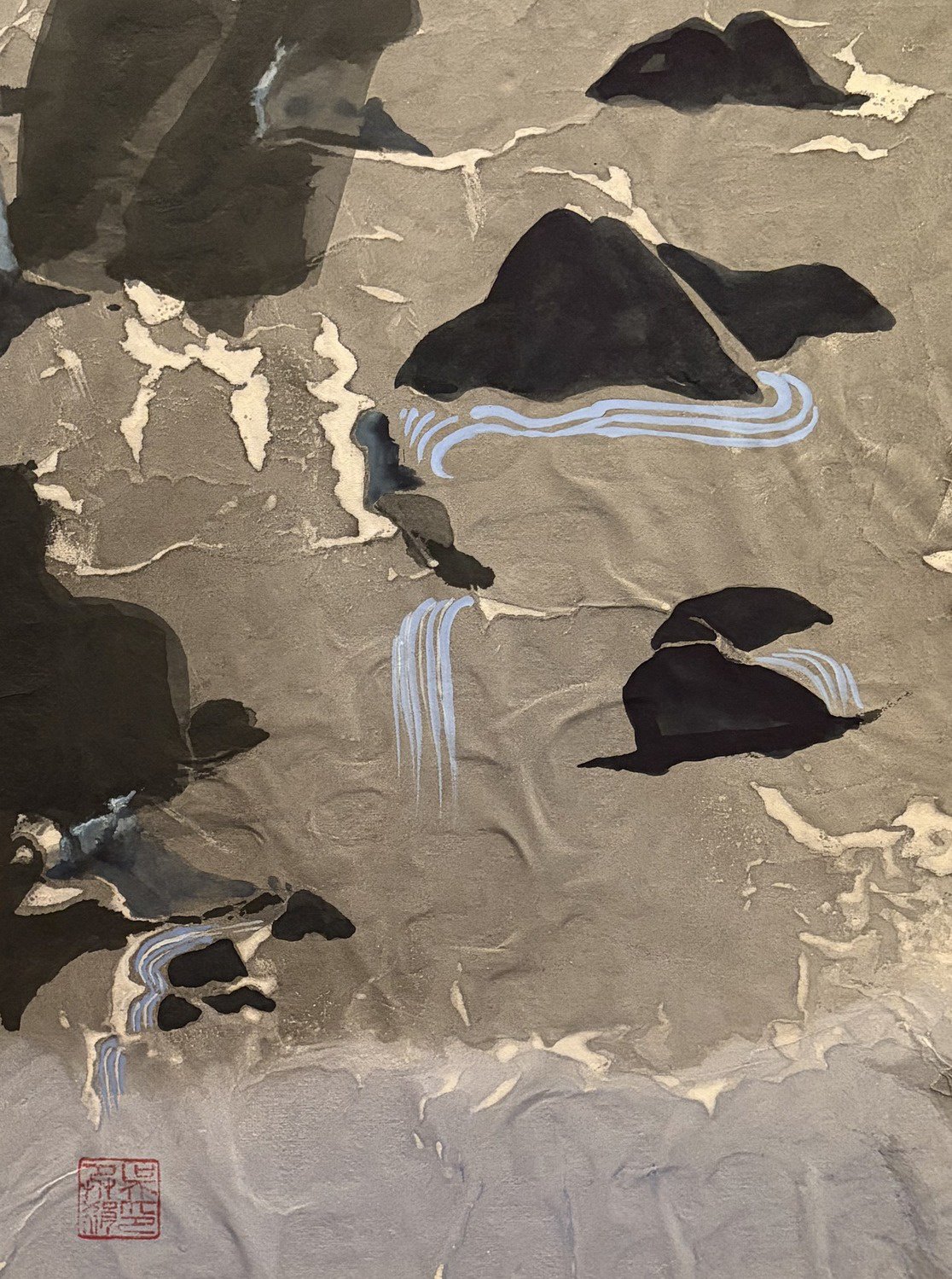
Interstate 5 in Los Angeles. The road I drove every day suddenly looked, one morning, like a landscape scroll.
Ink spatters trace the fast lines of the road; soft gold and ochre washes hold the California afternoon light. In the lower-left corner I wrote a calligraphic inscription beside the seal — the literati tradition of poetry on the painting, here applied to a freeway.
The freeway became my rice paper. Not for its shape, but for what it carried.
In this series, Interstate 5 becomes the central ink stroke of a literati landscape — a single black diagonal across pale washes of yellow and dusty rose, with the mountains and trees on either side brushed in quiet ink-wash. The painting makes a quiet but unmistakable claim: that the freeway is, formally, a river in a Korean mountain painting, and that my daily commute was, structurally, a meditation on a scroll.
Painting in a new land
I came across the sea carrying ink, brushes, and the stories of my ancestors. To paint the landscape of a new land in a familiar language — for me, an immigrant, that was a kind of arrival. It was a way of accepting the California in front of me through the brush I had learned.
In class I say this: the place you live is your own landscape. It is all right if you cannot paint the old mountains of Korea. The hill outside your window, the road you drive each day — look at it through ink, and it becomes a painting.
If this story spoke to you, come take up the brush in the studio.
Ask about lessons