The Ten Symbols of Longevity
The Sipjangsaeng (십장생) is a painting of ten long-living things: the sun, mountains, water, stone, clouds, pine, the herb of eternal youth, the turtle, the crane, and the deer. Koreans have long placed the wish for longevity into these ten.
This was never mere decoration. Both the one who painted and the one who received knew the blessing it held. At a parent's sixtieth birthday, at the door of the new year, the Sipjangsaeng was a wordless greeting: may you live long and well.
The painting was itself a blessing.
Rewriting the symbols
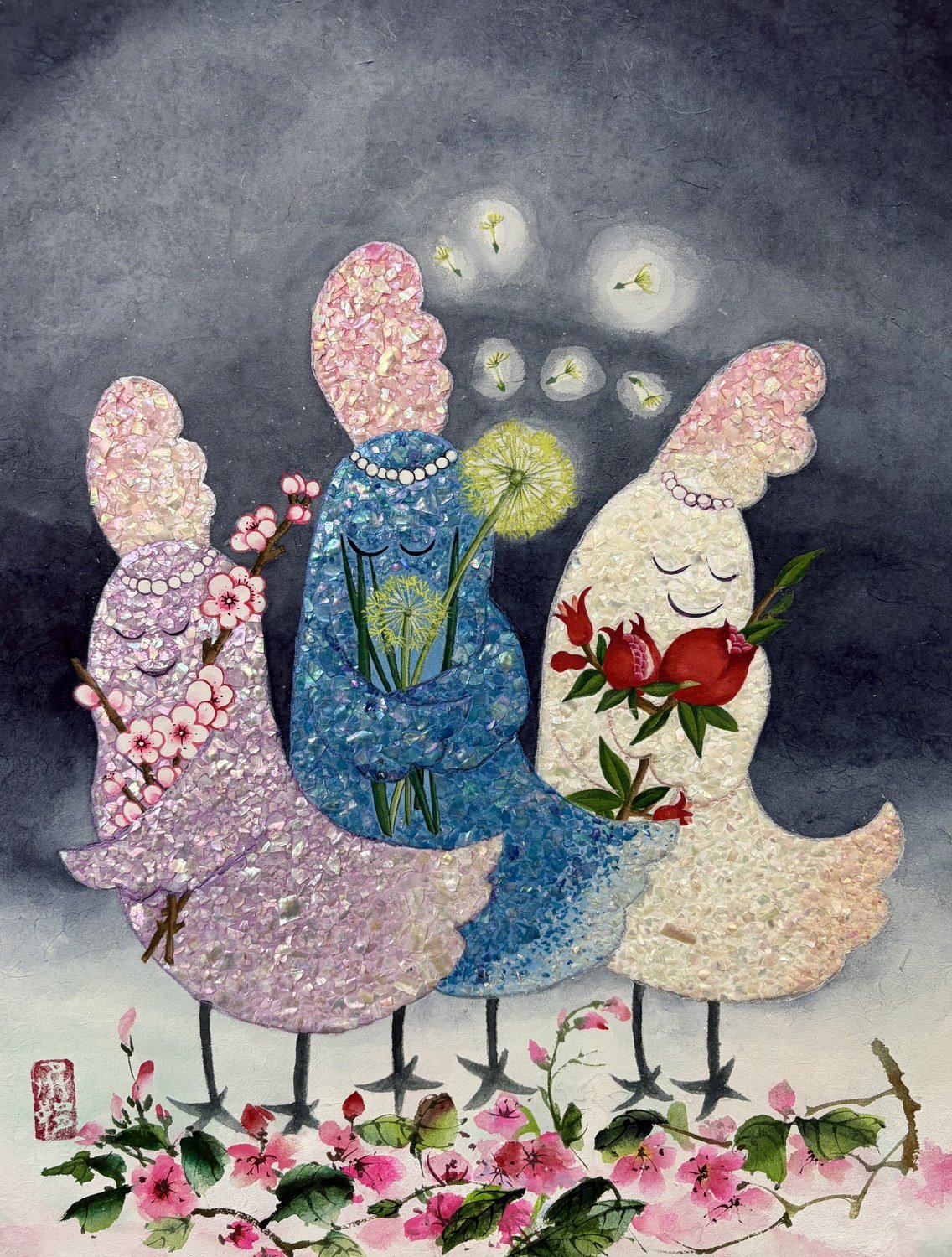
These old symbols return often in my own work. The crane still carries longevity and nobility; pine and mountain and water seep through the picture. But I do not leave them in their old form. In a painting of three chickens listening to music, each chicken cradles a different plant — plum blossom, dandelion seedhead, pomegranate — each holding a different wish.
Why learn the symbols
To those learning Minhwa, I always teach the meaning of the symbols alongside the brush. When you paint a peony knowing why it means wealth, a pomegranate knowing why it means fertility, the heart travels to the tip of the brush. To know the symbols is to learn how to speak through painting.
And once you have learned that language well enough, you can finally begin to write sentences of your own.
If this story spoke to you, come take up the brush in the studio.
Ask about lessons