Ink, Water, and Xuan Paper
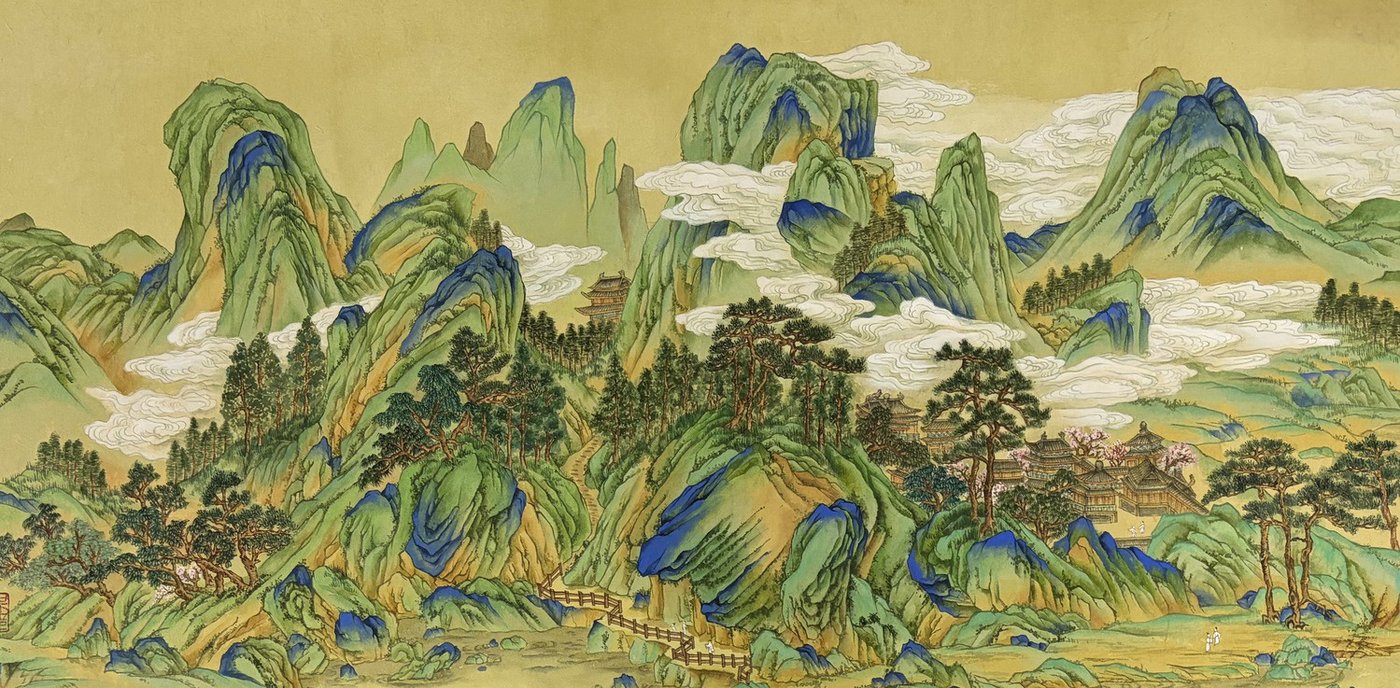
My materials are simple: Korean ink, Korean watercolor, and the pearl iridescence of mother-of-pearl laid on Xuan paper. But within these simple materials is a depth you could study a whole life and never exhaust.
The paper resists
Xuan paper accepts ink in a particular way. It does not receive it obediently, as Western canvas does; it hesitates a little, blooms and seeps. Even brushwork that looks wild is in fact a careful negotiation with the paper's own resistance.
The paper resists. Learning to respect that resistance is what it means to learn the brush.
The gradations of ink
Ink is not a single black. Meeting water, it becomes dozens of grays and blacks. Dark ink, dry ink, pale ink — the eye that reads the subtle layers between them is the heart of East Asian painting. That is how, without color, a single ink can render mist and rock and pine alike.
Not fearing the empty space
In East Asian painting, the empty places are not empty. They are mist, water, sky, breath. The thing beginners find hardest is exactly this empty space. To set down the urge to fill everything — that is the beginning of a long practice.
In class I always say: before learning how to paint well, learn how to listen to what the paper, the ink, and the water are saying on their own.
If this story spoke to you, come take up the brush in the studio.
Ask about lessons